
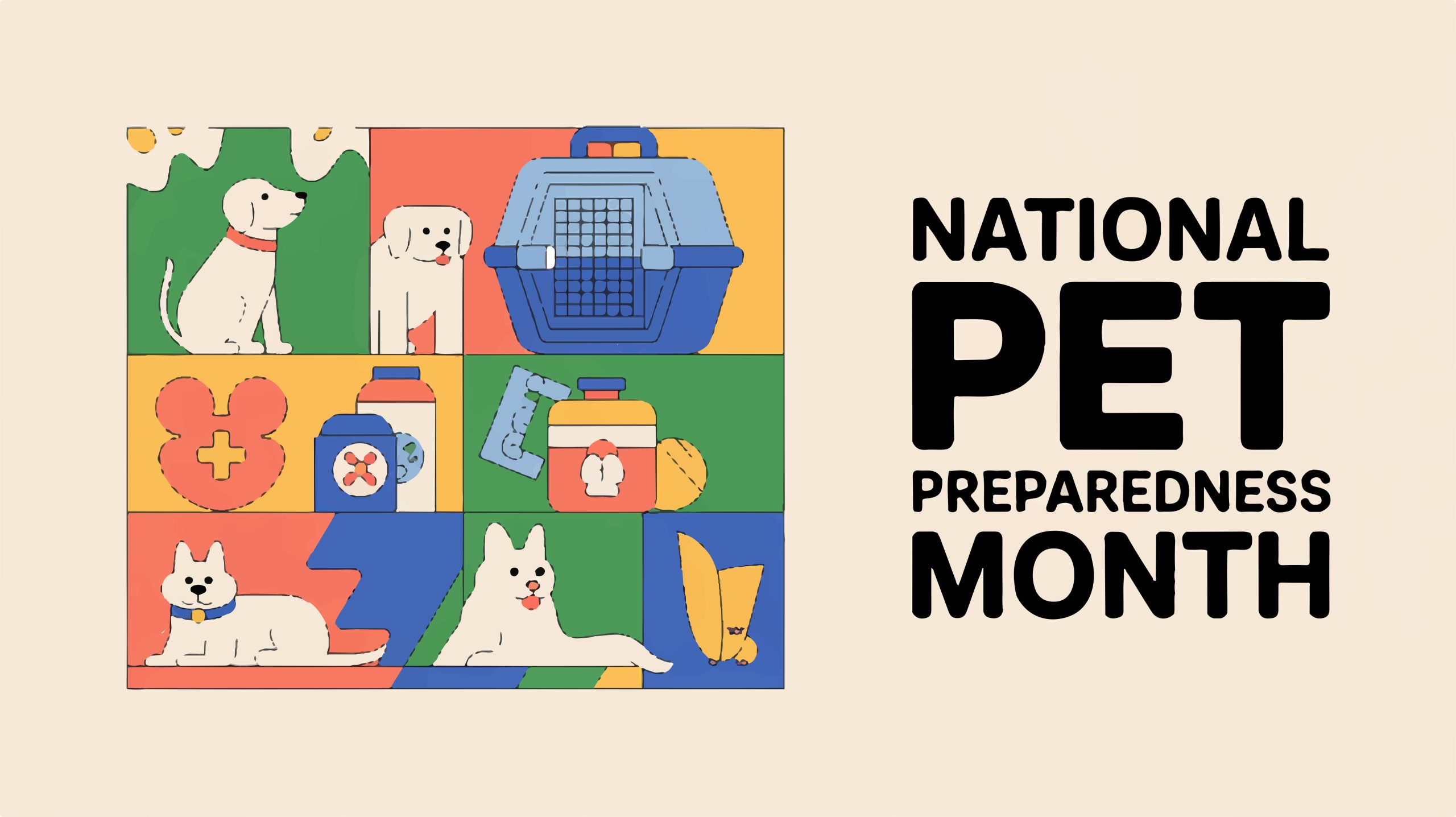
June is National Pet Preparedness Month, a reminder that emergency planning should include every member of your household, including your pets, service animals, and emotional support animals.
Whether you’re preparing for a wildfire, power outage, severe storm, or another emergency, having a plan in place can help keep both you and your animals safe. For people with disabilities, planning for the needs of service animals and support animals is especially important because these animals often play a critical role in daily life, independence, and well-being.
Why Pet Preparedness Matters
In an emergency, people often have only a few minutes to act. Trying to gather supplies, locate important records, or figure out where your animal can go during a crisis can add unnecessary stress to an already difficult situation.
A little preparation now can make a big difference later.
Build an Emergency Kit for Your Animal
Just as you should have an emergency kit for yourself and your family, you should have one for your animals. Consider including:
- Food and water for at least several days
- Medications and copies of prescriptions
- Food and water bowls
- Leash, harness, carrier, or crate
- Waste bags, litter, and cleaning supplies
- Comfort items such as toys or blankets
- Vaccination and veterinary records
- Recent photos of you and your animal together
- Contact information for your veterinarian
For service animals, include any specialized equipment they use, backup supplies, and information about their training or tasks if needed.
Plan Ahead for Evacuations
If you may need to leave your home during an emergency, identify pet-friendly or service-animal-accessible locations ahead of time.
Remember that service animals are generally allowed in emergency shelters and public accommodations under disability rights laws. However, it’s still helpful to research local shelter options and emergency resources before a disaster occurs.
If you rely on a service animal, consider:
- Identifying transportation options in advance
- Creating backup plans if you become separated
- Keeping identification tags current
- Carrying emergency contact information for people familiar with your animal’s needs
Don’t Forget Emotional Support Animals
While emotional support animals do not have the same public access rights as service animals, they are often an important source of comfort and stability, particularly during stressful situations.
Emergency plans should include:
- Adequate food and supplies
- Veterinary records
- Safe transportation arrangements
- Temporary housing options that allow animals
Having these details worked out ahead of time can reduce stress during an emergency and help ensure your support animal remains with you whenever possible.
Create a Support Network
Emergencies can happen when you’re away from home or unable to care for your animal yourself.
Consider identifying:
- Friends, family members, or neighbors who can assist
- Backup caregivers familiar with your animal’s needs
- Local boarding facilities or animal care providers
- Community emergency resources
Make sure trusted contacts know where supplies, medications, and important documents are located.
Practice Your Plan
Emergency plans work best when they’re practiced. Take time to:
- Review evacuation routes
- Practice loading animals into carriers or vehicles
- Update emergency supplies regularly
- Check expiration dates on food and medications
- Confirm contact information remains current
Independence Includes Preparedness
At SNCIL, we know that service animals, emotional support animals, and companion animals are often essential partners in helping people live independently and participate fully in their communities.
National Pet Preparedness Month is a great opportunity to review your emergency plans and make sure every member of your household, including those with four legs, is ready for whatever comes next.
A little preparation today can help protect the people and animals you care about tomorrow.