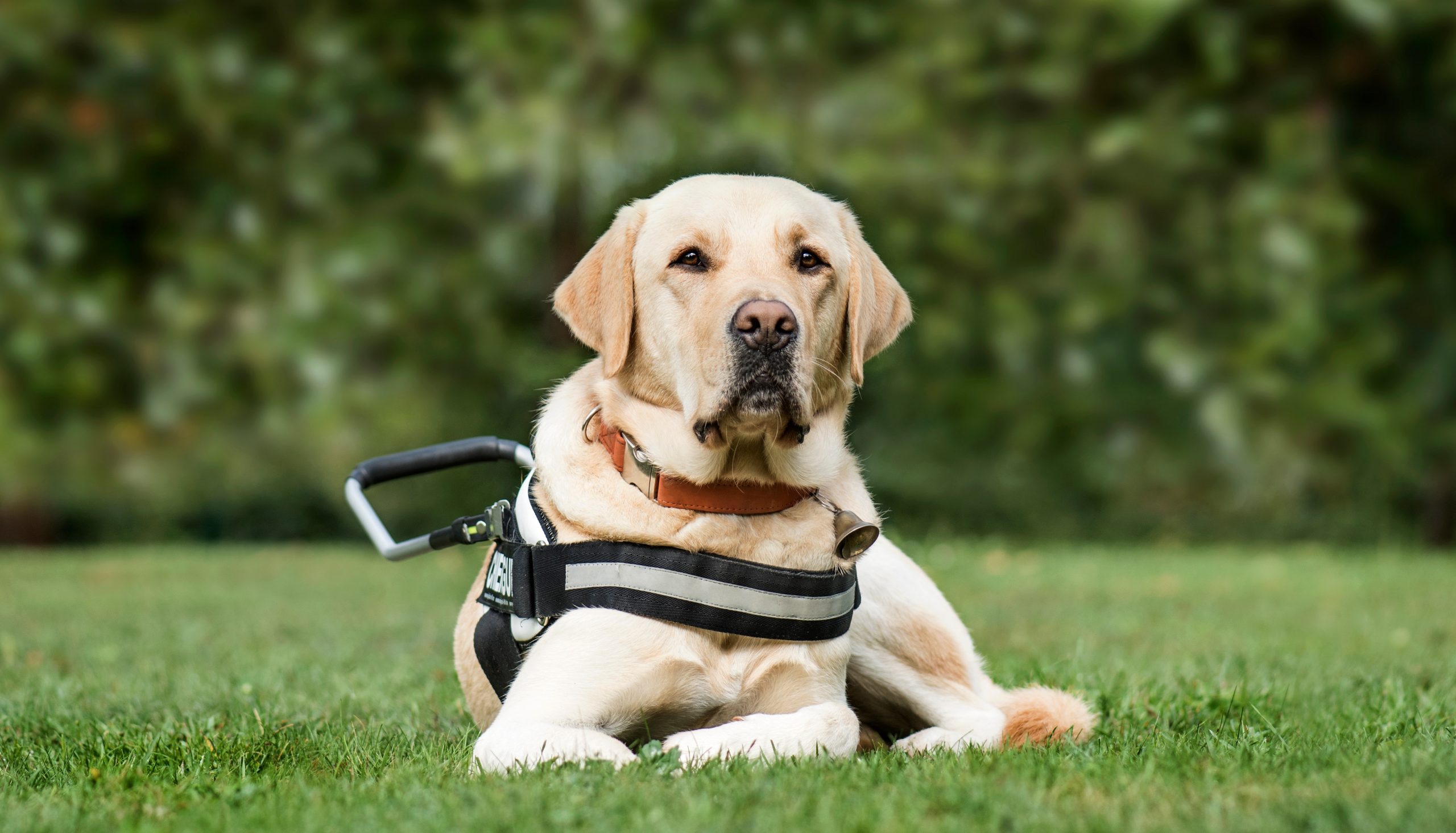
Wednesday, April 29 is International Guide Dog Day, a time to recognize the incredible role guide dogs and service dogs play in people’s lives.
Guide dogs are more than companions. They’re highly trained partners who help people who are blind or have low vision navigate the world safely and confidently, avoiding obstacles, stopping at curbs, and helping their handler move through daily life with greater independence.
But guide dogs are just one part of a broader community of service animals that support people with disabilities in many different ways.
More Than a Dog
Service dogs can be trained to assist with a wide range of needs, including:
- Guiding people who are blind or have low vision
- Alerting to medical conditions like seizures
- Supporting people with PTSD or anxiety
- Assisting with mobility and daily tasks
These dogs are individually trained to perform specific tasks that support their handler’s independence and safety.
Behind every service dog is a network of trainers, volunteers, and organizations working to make these partnerships possible.
Service Dog Organizations in Southern Nevada
Southern Nevada has a strong and growing community of organizations supporting service dog training and placement:
- Service Dogs of Southern Nevada provides personalized training programs, especially supporting veterans and first responders with service animals.
- Michael’s Angel Paws trains assistance dogs and has helped hundreds of people build partnerships that support greater independence and daily living.
- Rescue Dogs For Heroes pairs rescued dogs with veterans, first responders, and others who benefit from service dog support.
- Guide Dogs for the Blind has volunteer puppy raisers right here in the Las Vegas area, helping prepare future guide dogs for people who are blind or visually impaired.
- Guide Dogs of America | Tender Loving Canines trains guide dogs and service dogs for people who are blind, veterans, and children with autism.
These organizations, and many others, are helping expand access, training, and support across Nevada.
The Power of Partnership
A guide dog team is built on trust, communication, and teamwork.
The handler provides direction. The dog helps navigate safely. Together, they move through the world as a unit.
It’s a partnership that creates freedom, confidence, and connection, not just for the individual, but for the entire community.
How You Can Support
You don’t have to train a service dog to make a difference.
You can:
- Support local organizations through donations or volunteering
- Learn proper etiquette (always ask before interacting with a service dog)
- Advocate for accessibility and inclusion
- Share accurate information about service animals and disability rights
Even small actions help create a more inclusive community for everyone.
Celebrating Access and Independence
International Guide Dog Day is a reminder of what’s possible when training, partnership, and community come together.
It’s about access.
It’s about independence.
And it’s about making sure people have the tools and support they need to live the lives they choose.